The Full Story
Pages From the Past
Here, I explore history concepts and topics in a student-friendly way, from important events and movements to ideas that shaped societies and the world we live in today. History can sometimes feel complicated, with too many dates, names, and long explanations. I don’t always enjoy reading heavy textbooks, but I do enjoy learning when topics are explained clearly and simply. When there is too much information, it can feel overwhelming or boring. That’s why in this blog, I break down interesting history topics in my own words, making them easier to understand and more enjoyable to learn.
Big Concepts

What is the Cold War?
The Cold War was a long period of political tension that began after World War II, mainly between two powerful countries — the United States and the Soviet Union. Instead of fighting each other directly, both sides tried to increase their power and influence around the world. They competed through nuclear weapons, space exploration, propaganda, and by supporting different sides in smaller wars. The world lived in constant fear of a nuclear war, even though it never actually happened. The Cold War shaped global politics for decades and ended in 1991 with the collapse of the Soviet Union.
What is Imperialism?
Imperialism is when a powerful country expands its control over weaker regions to gain resources, wealth, and political power. European nations practiced imperialism by taking control of lands in Africa and Asia during the 19th and early 20th centuries. These countries benefited by taking raw materials and opening new markets, while the local population often suffered from exploitation and loss of freedom. Imperialism changed cultures, economies, and borders, and its effects are still felt in many parts of the world today.


What is Colonialism?
Colonialism occurs when one country directly rules another country, known as a colony. The ruling country controls the colony’s government, economy, and laws, usually for its own benefit. For example, Britain controlled India for nearly 200 years. While colonisers gained wealth and power, colonies often faced poverty, discrimination, and cultural suppression. Colonialism also led to resistance movements, as people fought for independence and self-rule.
What is Nationalism?
Nationalism is the belief that people should be loyal to and proud of their nation. It can bring people together, especially during struggles for independence or unity. Nationalism played a major role in freeing many countries from colonial rule in the 20th century. However, extreme nationalism can be dangerous, as it may lead to hostility toward other nations and cause wars. Nationalism can therefore be both a force for unity and a cause of conflict.


What is Communism vs Capitalism?
Communism and capitalism are two opposing economic and political systems. In capitalism, individuals own property and businesses, and the market decides prices and wages. In communism, the government controls land, factories, and resources to reduce inequality. During the Cold War, the USA supported capitalism while the USSR supported communism. This clash of ideas influenced global alliances, wars, and political decisions for many years.
What is Fascism?
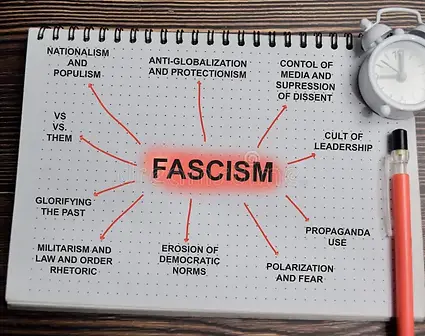
Fascism is a political system where all power is held by a single leader or party, and citizens have very limited freedoms. Fascist governments use strong nationalism, strict laws, and fear to control people. They often silence opposition and control the media. Fascism existed in countries like Nazi Germany and Italy before World War II and played a major role in causing the war.

What is Democracy?
Democracy is a system of government where people have the right to choose their leaders through elections. Citizens enjoy freedoms such as speech, expression, and equality before the law. Democracy allows people to question the government and participate in decision-making. It is valued because it protects human rights and gives people a voice in how they are governed.
What is Totalitarianism?
Totalitarianism is a system of government where the state has total control over every aspect of people’s lives, including education, media, and personal beliefs. The government allows no opposition and uses propaganda and fear to stay in power. Citizens have no personal freedom, and disagreement is punished. Totalitarianism was seen in countries like Nazi Germany and the Soviet Union under Stalin.

Wars & Conflicts

What Caused World War II?
World War II was caused by a mix of anger after World War I, economic problems, and the rise of dictators. The Treaty of Versailles punished Germany very harshly after WWI, which left many Germans feeling humiliated and angry. The Great Depression made life difficult for millions, causing unemployment and poverty. This allowed leaders like Adolf Hitler in Germany, Mussolini in Italy, and Japan’s military leaders to gain power by promising strength and national pride. The war officially began in 1939 when Germany invaded Poland, forcing Britain and France to declare war.
Why Did the Vietnam War Happen?
The Vietnam War happened mainly because of the Cold War rivalry between communism and capitalism. Vietnam was divided into communist North Vietnam and non-communist South Vietnam. The United States feared that if Vietnam became communist, other nearby countries would follow — this idea was called the Domino Theory. To stop the spread of communism, the USA supported South Vietnam, while the Soviet Union and China supported North Vietnam. The war became long and destructive, affecting civilians heavily and leading to major protests around the world.


What Was the Korean War?
The Korean War was fought between 1950 and 1953 and was another result of Cold War tensions. After World War II, Korea was divided into North Korea (communist) and South Korea (capitalist). When North Korea invaded South Korea, the United Nations (led by the USA) supported the South, while China supported the North. The war ended without a clear winner, but Korea remained divided, a division that still exists today.
Why Was the Middle East Unstable After World War II?
The Middle East became unstable after World War II due to colonial borders, foreign interference, and the creation of Israel in 1948. European powers had drawn borders without considering ethnic or religious differences, causing long-term tension. The establishment of Israel led to conflict between Israelis and Palestinians, which remains unresolved. Cold War rivalries and competition over oil also increased instability in the region.

What Was the Partition of India?
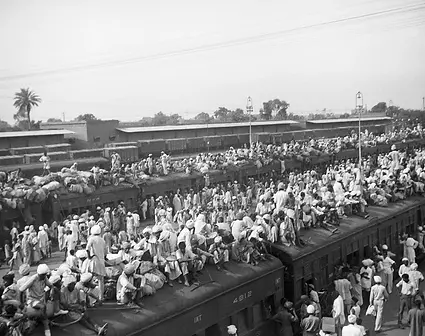
The Partition of India took place in 1947 when British India was divided into India and Pakistan. This happened because of rising religious tensions between Hindus and Muslims and disagreements over how the country should be governed after independence. The partition caused one of the largest mass migrations in history, with millions of people moving across borders. Sadly, it also led to widespread violence, loss of life, and deep trauma, the effects of which are still felt today.
Revolutions & Movements
What Was the French Revolution?
The French Revolution began in 1789 when people in France rebelled against an unfair system of government. French society was divided into classes, and the Third Estate (common people) paid heavy taxes while the king and nobles lived comfortably. Rising food prices, poverty, and anger toward absolute monarchy pushed people to revolt. The revolution led to the execution of King Louis XVI and ended absolute monarchy in France. It introduced important ideas like liberty, equality, and fraternity, which influenced many future revolutions.


What Was the Russian Revolution?
The Russian Revolution took place in 1917 and led to the fall of the Tsar (emperor) and the rise of communism. Most Russians lived in poverty while the ruling class held power and wealth. Poor working conditions, food shortages, and the impact of World War I increased public anger. The revolution was led by Vladimir Lenin and the Bolsheviks, who promised equality and better living conditions. As a result, Russia became the Soviet Union, the world’s first communist state.
What Was the American Revolution?
The American Revolution was a struggle between Britain and its 13 colonies in North America between 1775 and 1783. The colonists were angry about high taxes and laws imposed by Britain without their consent, summed up in the phrase “no taxation without representation.” They wanted freedom to govern themselves. After years of fighting, the colonies won independence and formed the United States of America. The revolution promoted ideas of democracy, freedom, and individual rights.


What Was the Industrial Revolution?
The Industrial Revolution was a period of major change that began in Britain in the late 18th century. It marked the shift from hand-made goods to machine-based production in factories. New inventions improved transport, manufacturing, and technology. While production increased and cities grew, workers often faced long hours, low wages, and unsafe conditions. The Industrial Revolution transformed economies and societies and laid the foundation for the modern world.
What Was the Civil Rights Movement?
The Civil Rights Movement took place mainly in the United States during the 1950s and 1960s. It aimed to end racial discrimination against African Americans and secure equal rights. Despite the end of slavery, segregation and inequality were common. Leaders like Martin Luther King Jr. used peaceful protests, marches, and speeches to demand change. The movement led to important laws that ended segregation and protected voting rights.


What Was Apartheid in South Africa?
Apartheid was a system of racial segregation enforced in South Africa from 1948 to the early 1990s. The government separated people based on race and gave most power and rights to the white minority. Non-white South Africans faced discrimination in education, jobs, housing, and daily life. Resistance grew both inside and outside the country, led by figures like Nelson Mandela. Apartheid ended in 1994, when South Africa held its first democratic elections.
Important Policies & Plans
What Was the Marshall Plan?
The Marshall Plan was a program started by the United States in 1947 to help rebuild Europe after World War II. Many European countries were destroyed, poor, and struggling to recover. The USA gave money, food, and supplies to help these countries rebuild their economies. The plan also aimed to stop the spread of communism, as the US believed poverty could make countries turn communist. The Marshall Plan helped Western Europe recover quickly and strengthened ties with the USA.


What Was the Treaty of Versailles?
The Treaty of Versailles was signed in 1919 to officially end World War I. It punished Germany very harshly by taking away land, limiting its army, and forcing it to pay large amounts of money as compensation. Many Germans felt the treaty was unfair and humiliating. This anger and resentment later helped extremist leaders like Hitler gain support, making the treaty one of the major causes of World War II.
What Was the League of Nations?
The League of Nations was an international organisation created after World War I to maintain peace and prevent future wars. Countries were encouraged to solve problems through discussion instead of fighting. However, the League was weak because it had no army and powerful countries often ignored it. The USA never joined, which reduced its authority. Because of these weaknesses, the League failed to stop aggression and eventually collapsed.


What Is the United Nations?
The United Nations (UN) was formed in 1945 after World War II to promote peace, cooperation, and human rights. Unlike the League of Nations, the UN included major world powers and had peacekeeping forces. It works to solve global problems such as wars, poverty, hunger, and climate issues. The UN is still active today and plays an important role in international relations.
What Was Containment?
Containment was a policy used by the United States during the Cold War to stop the spread of communism. The USA believed that if one country became communist, others nearby would follow. To prevent this, it supported non-communist governments with money, weapons, and military help. Containment influenced US involvement in wars like the Korean War and Vietnam War.

Politics & Power

How Did Hitler Rise to Power?
Adolf Hitler rose to power in Germany due to economic problems, political instability, and anger after World War I. The Treaty of Versailles and the Great Depression caused unemployment and poverty, making people desperate for change. Hitler promised to restore Germany’s pride, improve the economy, and undo the treaty. Through propaganda, strong speeches, and fear, he gained public support and became Chancellor in 1933.
How Did Mussolini Come to Power?
Benito Mussolini came to power in Italy after World War I when the country faced economic problems and political chaos. Many people feared communism and wanted strong leadership. Mussolini used violence, propaganda, and nationalist ideas to gain support. In 1922, he led the March on Rome, pressuring the king to appoint him Prime Minister. He later turned Italy into a fascist dictatorship.


Why Did Germany Get Divided?
After World War II, Germany was divided by the winning powers. The country was split into West Germany, controlled by the USA, Britain, and France, and East Germany, controlled by the Soviet Union. This division reflected the Cold War split between capitalism and communism. Germany became a symbol of Cold War tension, especially in the city of Berlin.
Why Did the Berlin Wall Fall?
The Berlin Wall fell in 1989 due to growing protests and weakening communist control in East Germany. People were unhappy with poor living conditions and lack of freedom. When the government announced relaxed travel rules, crowds rushed to the wall. Border guards allowed people to pass, and the wall was soon torn down. Its fall symbolised the end of the Cold War in Europe.


How Did the USSR Collapse?
The Soviet Union collapsed in 1991 due to economic problems, political corruption, and lack of freedom. Leader Mikhail Gorbachev introduced reforms like glasnost (openness) and perestroika (restructuring) to improve the system. These changes weakened central control, and many republics demanded independence. Eventually, the USSR broke apart, officially ending the Cold War.
Social & Economic History
What Was Life Like During the Industrial Age?
Life during the Industrial Age changed very quickly as machines replaced hand-made work. Many people moved from villages to cities to work in factories. While factory jobs provided regular wages, working conditions were often harsh. Workers laboured for long hours in unsafe environments, and child labour was common. Cities became overcrowded and polluted, with poor housing and sanitation. However, the Industrial Age also led to improvements in transport, communication, and production, shaping the modern world we live in today.


How Did Colonialism Affect Colonies?
Colonialism deeply affected colonies socially, economically, and culturally. Colonising countries took raw materials from colonies and used them to benefit their own economies, often leaving colonies poor and underdeveloped. Traditional industries were destroyed, and local people had little political power. Colonial rule also changed education, laws, and social structures, sometimes erasing local cultures and languages. Although infrastructure like railways was built, it mainly served colonial interests rather than local needs.
How Did Wars Affect Women and Children?
Wars had a major impact on women and children, especially civilians. While men fought on the battlefield, women often took up jobs in factories, farms, and hospitals to support the war effort. This helped change traditional gender roles. Children suffered greatly due to displacement, hunger, loss of education, and trauma. Many were forced to work or flee their homes. Even after wars ended, women and children continued to face long-term social and emotional consequences.


What Is Propaganda in History?
Propaganda is information used to influence people’s opinions, often by presenting only one side of the story. Governments used propaganda during wars to encourage patriotism, support the military, and reduce criticism. Posters, films, speeches, and newspapers were commonly used to shape public opinion. While propaganda can unite people, it can also spread misinformation and fear. Studying propaganda helps historians understand how governments controlled public thinking.
How Did Technology Change Warfare?
Technology completely transformed warfare over time. New weapons such as machine guns, tanks, submarines, aircraft, and nuclear bombs made wars more destructive. During World War I and II, technology increased casualties and changed battle strategies. Communication tools like radios and radar improved coordination between armies. While technology helped countries defend themselves more efficiently, it also increased the scale of destruction, making modern wars far more deadly.

History Explained Through Stories

How One Assassination Started World War I
In 1914, a single event changed the world forever. Archduke Franz Ferdinand of Austria-Hungary was assassinated while visiting Sarajevo. The assassin was linked to a nationalist group that wanted independence from Austrian rule. What could have stayed a local issue quickly grew bigger because Europe was already tense and divided by alliances. Austria-Hungary blamed Serbia, alliances were triggered, and within weeks, many countries were at war. This shows how one moment, when combined with existing tensions, can lead to global consequences.
A Day in the Life of a Factory Worker in 1850
Imagine waking up before sunrise and working 12–14 hours a day in a noisy, crowded factory. This was normal life for factory workers during the Industrial Revolution. Men, women, and even children worked long hours for low wages in unsafe conditions. The air was filled with dust and smoke, and injuries were common. Despite the hardship, workers depended on these jobs to survive. Their struggles later led to labour laws, unions, and better working conditions.


What It Was Like to Live in Berlin During the Cold War
During the Cold War, Berlin was a city divided by ideology. Families were separated by the Berlin Wall, which symbolised the split between communism and capitalism. In East Berlin, people lived under strict government control with limited freedom, while West Berlin enjoyed greater freedom but constant tension. Soldiers guarded borders, and escape attempts were dangerous. Everyday life was shaped by fear, surveillance, and political division, making Berlin one of the most powerful symbols of the Cold War.
How Ordinary People Experienced Partition in 1947
The Partition of India in 1947 affected millions of ordinary people overnight. Families were forced to leave their homes, often with nothing but the clothes they wore. Trains were overcrowded, violence spread, and many people lost loved ones along the way. For most, Partition was not about politics, but about survival, loss, and displacement. Even decades later, memories of Partition remain deeply emotional, showing how political decisions can deeply affect human lives.


Childhood During World War II
Childhood during World War II was very different from today. Many children grew up surrounded by bombings, rationing, and fear. Schools were closed, food was limited, and families were often separated. Some children were evacuated to the countryside for safety, while others were forced to grow up quickly and take responsibility. Despite this, children found small ways to cope and survive. Their experiences remind us that wars do not only affect soldiers, but also the most vulnerable.
Ideologies & Power
Nazism: belief system, symbols, and control
Nazism was the ideology followed by Adolf Hitler and the Nazi Party in Germany. It was based on extreme nationalism, belief in racial superiority, and complete loyalty to one leader. Nazis believed Germans were superior and blamed minorities, especially Jews, for the country’s problems. Symbols like the swastika, uniforms, and mass rallies were used to create unity and obedience. Control was maintained through propaganda, fear, censorship, and violence.


Communism as an Idea: Theory vs Reality
In theory, communism aims for a society where everyone is equal, and wealth and resources are shared. There is no private ownership, and the government controls major industries to prevent inequality. In reality, however, many communist states became authoritarian, where power was concentrated in the hands of a few leaders. Instead of equality, people often faced shortages, lack of freedom, and strict government control.
How Capitalism Shapes Societies
Capitalism is an economic system where individuals and companies own property and businesses. It encourages competition, innovation, and economic growth. Capitalism can create wealth and opportunities, but it can also lead to inequality, where some people become very rich while others struggle. How fair a capitalist society is often depends on government laws and social policies.


Fascism vs Nazism: What’s the Difference?
Fascism is an authoritarian system that focuses on strong leadership, nationalism, and control over society. Nazism is a specific form of fascism that adds racial ideology, especially antisemitism. While fascism emphasises power and obedience to the state, Nazism goes further by ranking people based on race. All Nazis were fascists, but not all fascists were Nazis.
How Propaganda Controls Public Opinion
Propaganda is information used to influence how people think, often by showing only one side of the truth. Governments use posters, speeches, media, and education to shape beliefs and emotions. Propaganda works by repeating messages, using fear or pride, and creating enemies. When people are exposed to propaganda constantly, it becomes harder for them to question authority.


Why Dictatorships Rise in Times of Crisis
Dictatorships often rise during economic, political, or social crises. When people are scared, unemployed, or angry, they may support strong leaders who promise stability and quick solutions. These leaders often reduce freedoms in the name of security. Over time, power becomes concentrated, and opposition is removed.
The Role of Fear in Authoritarian Regimes
Fear is a key tool used by authoritarian governments to stay in power. People may fear punishment, prison, or harm if they disagree with the state. Surveillance, secret police, and strict laws discourage resistance. When fear is widespread, people begin to censor themselves, making control easier for the government.


How Ideology Shapes Everyday Life
Ideology doesn’t just affect politics — it influences education, media, laws, and daily behaviour. It shapes what people are taught to believe, who they are encouraged to admire, and what ideas are considered acceptable. Over time, ideology can affect how people think about themselves, others, and society as a whole.